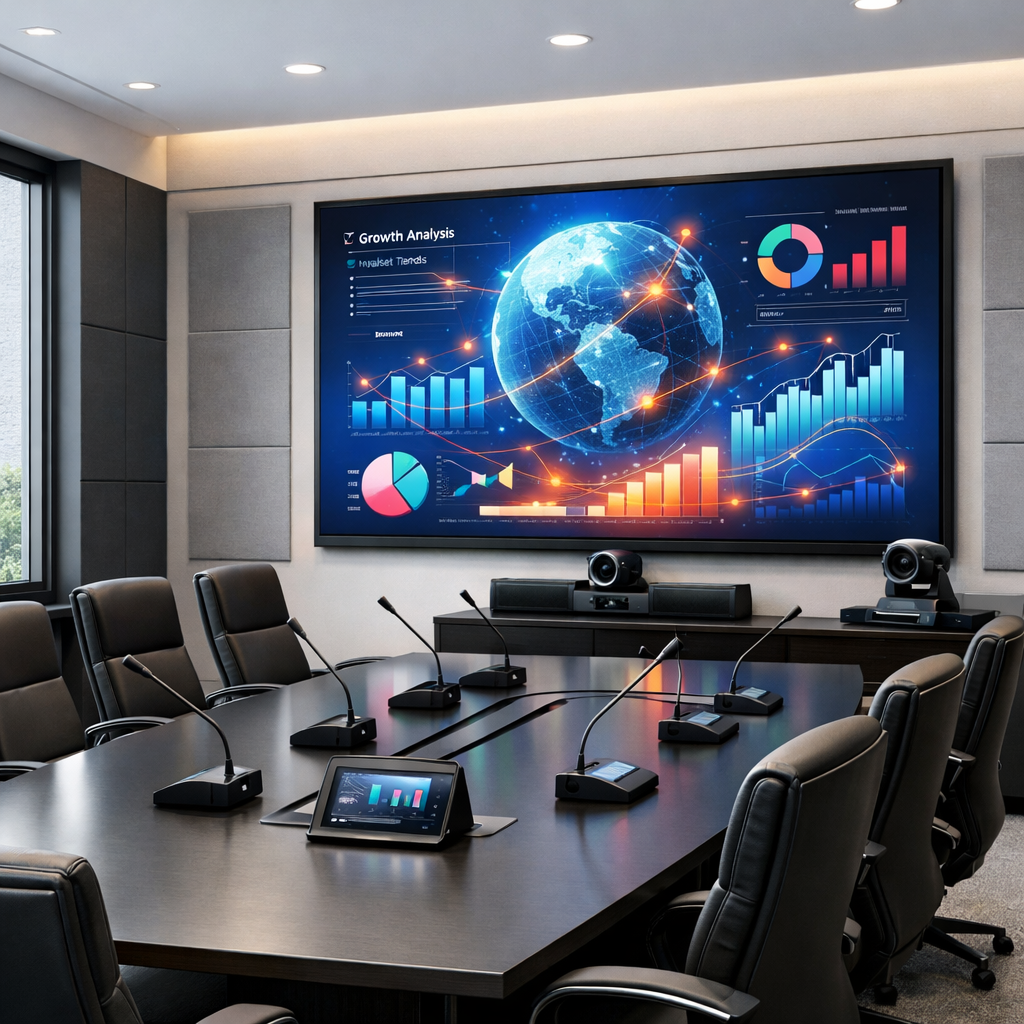




For many organizations, Pro AV was traditionally the “dessert tray” of a building project, something considered only after the main meal had already been served.
Displays, speakers, and conference room systems were selected late in the process, installed after core infrastructure was in place, and treated as finishing details rather than foundational systems.
That approach no longer reflects reality.
Today, Pro AV is firmly on the main menu. Modern AV systems are deeply connected to enterprise networks, cloud platforms, identity management, and cybersecurity policies.
As the AVIXA Audiovisual Best Practices guide notes, “the greatest differentiation between pro-AV and other trades is that pro-AV involves the full-blown creation of communications environments.” AV professionals are not just concerned with cabling and hardware, but with making it possible for organizations to communicate effectively.
That shift has real infrastructure implications. Today’s AV systems rely on bandwidth, low latency, secure access, and ongoing software updates to function properly, especially as collaboration platforms evolve and new technologies become part of everyday meeting rooms.
As Joe Way, cofounder of HETMA and a longtime AV industry leader, puts it: “Customers are starting to expect open, API-driven ecosystems that tie AV into identity, data, security, scheduling, and support workflows, not just a stack of gear installed in a space.”
The bottom line is clear. Pro AV is no longer just an audiovisual concern. It is an IT infrastructure conversation.
And when AV is planned without IT involvement, the consequences usually surface quickly in the form of frustrated users, unreliable performance, and difficult post-installation fixes.
The Role of Pro AV Has Changed
Pro AV used to be largely self-contained. A conference room might include a projector, a switcher, and a control panel, all operating independently from the organization’s core network.
Modern environments look very different.
Today’s AV systems commonly include:
- Cloud-based conferencing platforms.
- Networked displays and encoders.
- AV-over-IP distribution.
- Centralized monitoring and remote support.
- Integration with room scheduling and collaboration tools.
These systems are no longer isolated endpoints. They are active participants on the network, sharing infrastructure with business-critical applications.
As a result, AV performance is now inseparable from IT performance.
Why AV Performance Depends on IT Decisions
When Pro AV runs on the network, its success depends on the same fundamentals that support other enterprise systems.
Network capacity and latency
High-resolution video, real-time collaboration, and AV-over-IP distribution place sustained demands on bandwidth and latency. If the network is not designed with AV traffic in mind, users experience choppy video, audio dropouts, and unreliable connections.
Security and access control
Modern AV devices are networked computers with firmware, operating systems, and management interfaces. Without proper segmentation, authentication, and update policies, they can introduce security risks or become difficult to manage at scale.
Quality of service and prioritization
Voice and video traffic are sensitive to delay and packet loss. IT policies around VLANs, QoS, and traffic shaping directly affect whether AV systems deliver a consistent experience.
Monitoring and support
Organizations increasingly expect conference rooms and collaboration spaces to be supported like any other IT asset. That requires visibility into device health, connectivity, and usage, not just physical installation.
When AV is planned outside of IT, these dependencies are often overlooked until problems surface in production.
The Business Impact of Treating AV as “Just AV”
The failure of Pro AV systems rarely shows up as a dramatic outage. Instead, it erodes confidence over time.
Common symptoms include:
- Meetings that start late due to connection issues.
- Remote participants struggling to hear or see clearly.
- Conference rooms that users avoid because they feel unreliable.
- Help desk tickets that bounce between AV vendors and IT teams.
- Executives questioning why expensive collaboration tools are underused.
None of these issues stem from poor displays or microphones alone. They usually trace back to planning gaps between AV and IT.
When AV is treated as an isolated scope, organizations pay for it through lost productivity and diminished user experience.
Why IT Teams Are Now Stakeholders in Pro AV
IT teams are increasingly responsible for:
- Network performance and uptime.
- Security posture and compliance.
- Identity management and access policies.
- Standardization across platforms.
- Lifecycle management of connected devices.
Pro AV intersects with all these responsibilities.
As a result, IT leaders are being pulled into AV decisions whether they planned to be or not. When they are involved early, AV systems are more likely to align with existing standards and scale smoothly. When they are brought in late, they are often asked to “make it work” after the fact.
Treating Pro AV as IT infrastructure acknowledges this reality and allows teams to plan accordingly.
What a Modern Pro AV Strategy Looks Like
A modern Pro AV approach does not mean turning AV teams into network engineers or asking IT to design display layouts. It means aligning disciplines early so decisions reinforce each other.
Effective strategies typically include:
- Early coordination between AV, IT, and facilities teams.
- Network-first AV design that accounts for bandwidth and segmentation.
- Standards-based platforms that align with IT policies.
- Clear ownership for monitoring, updates, and support.
- Documentation that treats AV devices as managed assets.
When Pro AV is planned this way, systems are more reliable, easier to support, and better adopted by users.
As AVIXA notes, “successful AV installations rarely come down to the technology alone, instead hinging on collaboration. When facilities teams and AV integrators work in sync from the start, projects run smoothly and deliver lasting impact.”
Where Integrated Partners Add Value
As Pro AV becomes more intertwined with IT infrastructure, coordination gaps carry greater risk. Fragmented planning can lead to rework, delays, and performance issues that are difficult to untangle once systems are live.
That is why many organizations are turning to partners who understand both sides of the conversation and can bridge AV, data, and network requirements from the start.
At Hexatronic Integrated Technologies, Pro AV is designed and delivered as part of a broader infrastructure strategy. Our teams work across audiovisual, data communications, security, DAS, and electrical systems to ensure that AV solutions align with network realities, security requirements, and long-term operational goals.
By treating Pro AV as infrastructure rather than an afterthought, organizations can create collaboration environments that work consistently, scale intelligently, and support the way people communicate today.
Build Pro AV systems that your IT team can support and your users will trust. Contact Hexatronic Integrated Technologies today to discover how integrated infrastructure planning delivers better outcomes for your industrial, healthcare, technology or commercial sector project.