


Data center demand, driven by cloud computing and AI acceleration, has all the appearances of a runaway train, but growth could be throttled as primary markets hit saturation, with record-low vacancies limiting new capacity.
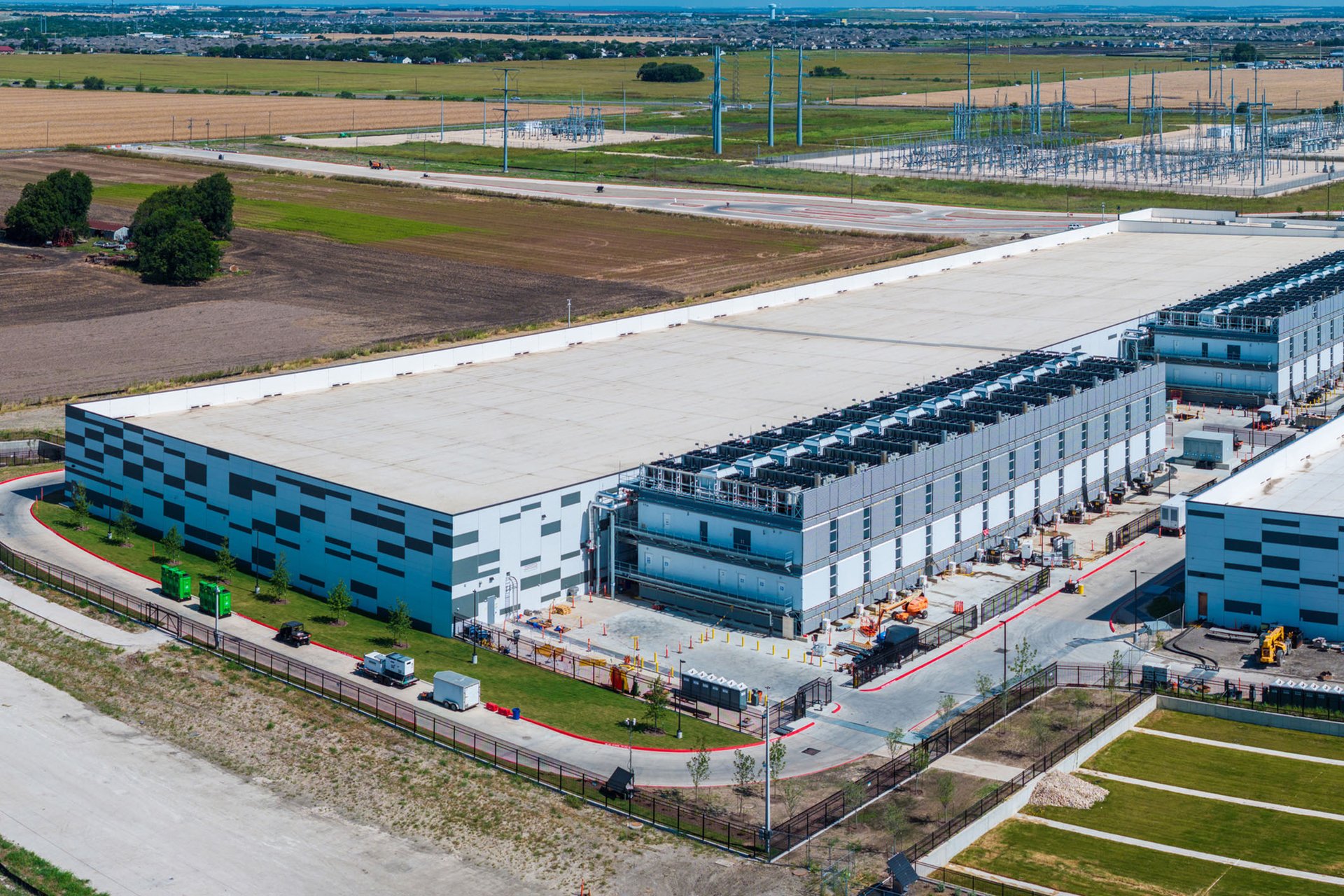
Fortunately, opportunities are emerging across the U.S. in previously untapped markets as data center projects spring up in Kansas sunflower fields, along the Alabama limestone ridges and throughout Texas Hill Country.
As major U.S. data center hubs experience near-zero vacancy rates, such as 0.3% in Northern Virginia and 1.8% in the Dallas–Fort Worth Metroplex, according to CBRE, emerging markets from West Texas to Tennessee are offering land, power and more predictable permitting environments for both hyperscale and edge deployments.
McKinsey & Company reports that hyperscalers are increasingly turning to secondary, high-potential and emerging markets to help keep up with demand and relieve pressure on primary hubs.
“States that can effectively plan, manage and mitigate the risks of data center growth stand to unlock millions, perhaps even billions, of dollars in direct and indirect growth. At the same time, they can create high-paying jobs and establish themselves as leading digital-infrastructure hubs,” according to McKinsey analysis.
With data center demand expected to grow 20–25% annually through 2030, many emerging markets are taking a page out of the Northern Virginia playbook, where a reliable energy grid, ready infrastructure and targeted tax incentives helped the region account for an estimated 10–15% of the world’s data center capacity.
In fact, the Pew Research Center found that more than 1,500 new data centers are in various stages of development nationwide (planned, under construction or land banked) and 67% of those planned facilities are in rural areas, a sharp reversal from the 87% of existing data centers concentrated in urban areas today.
What “Emerging Market” Actually Means Right Now
Not every emerging market is emerging for the same reason and that distinction matters for anyone trying to understand where the next wave of data center investment is headed.
-
In Kansas, cheap agricultural land and power grid availability have made rural counties attractive to hyperscale developers looking for room to build multi-building campuses without the permitting delays common in saturated metro markets.
-
Alabama has leaned on its statewide Middle-Mile Fiber Network and its comparatively low utility costs to attract projects that need reliable, affordable power more than they need proximity to a major population center.
-
Tennessee has combined targeted state incentives with grid capacity freed up by an aging industrial base to position itself as a landing spot for developers, with 13 facilities now operational or under construction within the Nashville metro area alone.
The common thread is policy readiness. As McKinsey has noted, states that can effectively plan for and manage data center growth stand to capture significant direct and indirect economic benefits, while states that move slowly on permitting, power allocation or water use risk losing projects to faster-moving competitors.
That dynamic is already reshaping site selection. Developers are no longer just asking where land is cheap. They are asking which states have the regulatory and utility infrastructure in place to bring a project online on schedule.
For hyperscale operators chasing the Northern Virginia model, that means prioritizing markets with grid capacity and a track record of fast-tracking large industrial projects. It is a calculation built around scale: enough power, enough land and enough political will to support a campus that may eventually draw hundreds of megawatts.
But grid capacity and political will are not the only variables emerging markets bring to the table and increasingly, they are not the hardest ones to solve. A growing NIMBY chorus has organized against AI data center projects in urban, suburban and rural communities alike, with 7 in 10 Americans now opposing the construction of AI data centers in their local area, according to Gallup. No market, however favorable its land, power or incentives, is immune to that resistance and developers who treat community opposition as an afterthought are increasingly finding it can stall or sink a project regardless of how strong the underlying fundamentals look on paper.
Two Different Buyers, Same Markets
The pressures reshaping emerging markets, power availability, land cost, incentive structures and community pushback, affect hyperscale and edge deployments differently, because the two are not solving the same problem.
-
Hyperscale operators are playing a long game built around scale. A single hyperscale campus can require hundreds of megawatts of committed power, dedicated substations and years of planning before the first server rack goes live. For these developers, emerging markets are attractive largely because they offer room to grow: undeveloped land, grid capacity that has not already been claimed by a competing project and state and local governments willing to fast-track the permitting and utility agreements that make multi-phase campuses possible.
-
Edge deployments operate on a different logic entirely. Rather than chasing raw power capacity, edge facilities are built to sit close to the people and devices generating and consuming data, which means proximity, not scale, is the deciding factor. The expansion of 5G networks, the growth of IoT device density and rising demand for low-latency content delivery are pushing edge infrastructure into markets that would never register on a hyperscale site-selection scorecard. A regional distribution hub or a mid-sized metro with growing enterprise demand does not need a 300-megawatt campus. It needs a smaller, faster-to-deploy facility positioned close enough to reduce latency for the businesses and consumers it serves.
That distinction helps explain why the same emerging markets can attract both kinds of projects at once, often without much overlap in scale or footprint. A rural Kansas county might land a hyperscale campus built around available land and grid capacity, while a growing secondary metro in the same region might see edge facilities arrive for entirely different reasons tied to population growth and network demand. Both count as data center growth in an emerging market. Both come with distinct infrastructure requirements.
The Scale of What’s Coming
The scale of this shift becomes clearer when measured against national power demand. U.S. data center power demand is projected to more than double by 2027, climbing to 66 gigawatts from 31 gigawatts in 2025, according to Goldman Sachs Commodities Research, driven largely by the accelerating build-out of AI infrastructure.
Goldman also cautions that only 50–60% of the capacity scheduled to come online in the next one to two years is likely to hit that timeline, given ongoing delays and cancellations tied to power and equipment constraints.
That gap between planned and delivered capacity is pushing operators further into emerging markets. Established hubs including Northern Virginia, Phoenix, Dallas–Fort Worth, Chicago, Atlanta and Portland/Eastern Oregon remain active, but rising power costs, limited grid capacity and tougher permitting are increasingly limiting how much new demand they can absorb, according to Data Center Knowledge.
The result is a wave of major projects landing well outside traditional hubs, including OpenAI’s Stargate and Vantage Frontier in Texas, Amazon buildouts in Pennsylvania and North Carolina, Meta’s project in Louisiana and a Compass-Meridian development in Mississippi.
“First and foremost, any regions that can deliver power to sites are going to have a leg up,” John McWilliams, head of data center insights, global research at Cushman & Wakefield, told Data Center Knowledge, adding that Texas as a whole, not just the Dallas area, is drawing outsized interest from developers.
Building the Infrastructure Behind the Shift
Whether it’s a hyperscale campus chasing gigawatts of committed power or an edge facility positioned for low-latency delivery, emerging markets across the U.S. are becoming the proving ground for the next phase of data center growth. Each comes with its own infrastructure demands and in most of these markets, that infrastructure has to be built from the ground up.
Hexatronic delivers the fiber connectivity solutions that support both ends of that spectrum, from dense structured cabling for large-scale campuses to scalable, rapidly deployable systems for distributed edge sites. Contact Hexatronic today to learn how our fiber connectivity systems and advanced services can support your next data center build-out, wherever that next market emerges.