



Reliable data center connectivity depends on more than high-speed switches and redundant power. It also depends on whether teams can identify, access and change physical connections quickly when a fault, upgrade or capacity expansion demands it.
The stakes are real. Uptime Institute’s Annual Outage Analysis 2025 reported that overall outage frequency and reported severity have continued to decline, but outage prevention remains a strategic priority for data center owners and operators.
The report also points to the growing complexity of modern architectures, external threats and a rise in IT- and networking-related outages as risks that operators must continue to manage. It also found that IT and networking issues accounted for 23 percent of impactful outages in 2024, with increasing complexity, change-management issues and misconfigurations cited as contributing factors.
Patch panels are one practical part of that operational discipline. They provide organized, accessible connection points that make structured cabling easier to manage. When integrated into a well-labeled, documented cabling system, patch panels can simplify troubleshooting, support more controlled moves, adds and changes and help keep an evolving data center environment serviceable.
What a Patch Panel Does
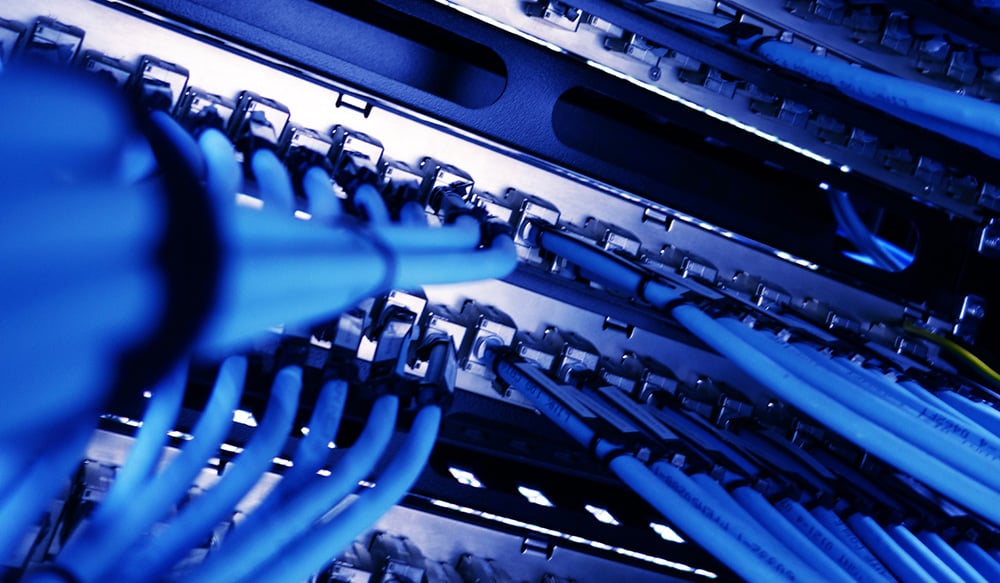
A patch panel provides an organized termination point between the permanent, structured cabling installed throughout a facility and the active network equipment in a rack. Cable runs routed through pathways such as walls, conduits and overhead trays terminate at the rear of the panel. Technicians then use short patch cords at the front of the panel to connect those runs to switches and other network equipment.
This separation between permanent cabling and equipment connections is a fundamental structured-cabling practice. TIA-568 is part of the Telecommunications Industry Association’s family of commercial-building telecommunications cabling standards; in practical terms, structured cabling is designed to create an orderly, manageable infrastructure rather than a collection of long, device-to-device cable runs.
When a server needs to move, a switch is replaced or a port requires attention, staff can often make the necessary change by moving or replacing a short patch cord at the panel. That approach avoids disturbing the permanent cabling behind the rack and can support faster, more controlled changes while reducing the likelihood of affecting unrelated connections.
Copper, Fiber and Everything in Between
Patch panels are commonly categorized by the media they support: copper, fiber or, in some systems, a combination of both.
Copper patch panels support twisted-pair cabling such as Cat5e, Cat6 and Cat6A. They are used for Ethernet connections in environments ranging from telecommunications rooms and office networks to data-center applications that use copper to connect servers, switches and other equipment.
Fiber patch panels terminate and manage optical cabling, including the high-density fiber connections widely used in modern data centers. As bandwidth, port density and switching architectures evolve, fiber often becomes more prominent at aggregation points and in other high-capacity portions of the physical infrastructure.
Within those categories, teams can also choose between pre-populated and modular patching systems. A pre-populated or loaded, panel is supplied with connectivity components (such as jacks, adapters or cassettes) already installed. This approach can simplify deployment when the required port count, connector type and media are known in advance.
Modular panels and enclosures allow operators to add, replace or mix compatible adapter panels and cassettes as connectivity requirements change. That flexibility can be particularly valuable in data centers planning phased growth, higher port densities or future migration to new fiber-connector and transceiver formats. Hexatronic Data Center offers modular patching options across multiple density tiers, from compact to high-density.
Panel geometry also affects cable management. Flat panels offer a familiar, straightforward layout. Angled panels route patch cords toward the sides of the rack, where they can enter vertical cable managers more directly. In the right rack design, that arrangement can reduce front-of-rack congestion and help teams maintain orderly routing, bend-radius and strain-relief practices, particularly in high-port-count copper deployments. It should be evaluated alongside the rack, cable-management hardware, patch-cord lengths and airflow-containment strategy rather than as a stand-alone airflow solution.
Why Organization at Scale is a Different Problem
In a small server closet, a tangle of cables may be an annoyance. In a data center with thousands of ports spread across multiple racks, it can become an operational challenge. When patch cords and cable bundles obstruct intended airflow paths, they can make it harder to maintain designed cooling conditions and may contribute to localized hot spots. Disorganized cabling can also slow troubleshooting when technicians cannot quickly identify the connection between a cable, a port and a specific device.
ANSI/TIA-942 addresses data-center physical infrastructure and establishes minimum requirements that include telecommunications infrastructure, alongside architectural, electrical, mechanical, fire-safety and security considerations. Its scope therefore extends beyond the general commercial-building cabling focus of TIA-568. Applied alongside clear labeling, accurate documentation, appropriate pathways and disciplined change-control practices, data-center cabling standards can help teams create an environment that is easier to maintain, scale and modify in a controlled way.
That kind of operational discipline matters as data-center architectures become more complex. It also reinforces the broader takeaway from Uptime Institute’s 2025 outage analysis: preventing and managing outages remains a strategic priority, particularly as organizations contend with changing technology, growing system complexity and operational risk.
Best Practices for Patch Panel Management
Getting the hardware right is only part of the equation. Daily management of patch panels determines whether the cabling stays organized over time.
-
Labeling: Every port should follow a consistent labeling convention that ties back to documentation, whether that’s a rack elevation diagram or a cable management database. Ambiguous or missing labels can reduce the value of even a well-organized panel within months.
-
Documentation: Port mapping should live somewhere more durable than institutional knowledge. When the person who knows “which cable goes where” leaves the organization, undocumented infrastructure can become a liability.
-
Cable slack: Leaving appropriate slack at the patch panel can allow for future re-termination without running new cable, but excessive slack can contribute to clutter and airflow issues. Trained installers typically follow manufacturer and standards guidance on service loops for this reason.
-
Capacity planning: Data centers that plan patch panel density around anticipated growth, rather than current needs alone, can avoid a more disruptive retrofit of cabling infrastructure later. Modular panels can help here, since additional ports can be added without replacing the whole panel.
A Practical Piece of the Reliability Picture
Patch panels are easy to overlook until something goes wrong, but organizations that invest in structured, standards-aligned patch panel deployment tend to spend less time managing avoidable cabling issues. Following TIA-568 and TIA-942 guidance is a practical framework for infrastructure that’s easier to troubleshoot, more manageable to maintain and better positioned to scale.
Hexatronic Data Center designs and manufactures patch panels and modular patching systems built around these same structured cabling principles, from compact enclosures to high-density solutions for growing environments. For data centers evaluating their structured cabling strategy, Hexatronic Data Center’s patching products offer a starting point for building infrastructure that stays organized, serviceable and ready to scale as capacity needs grow.