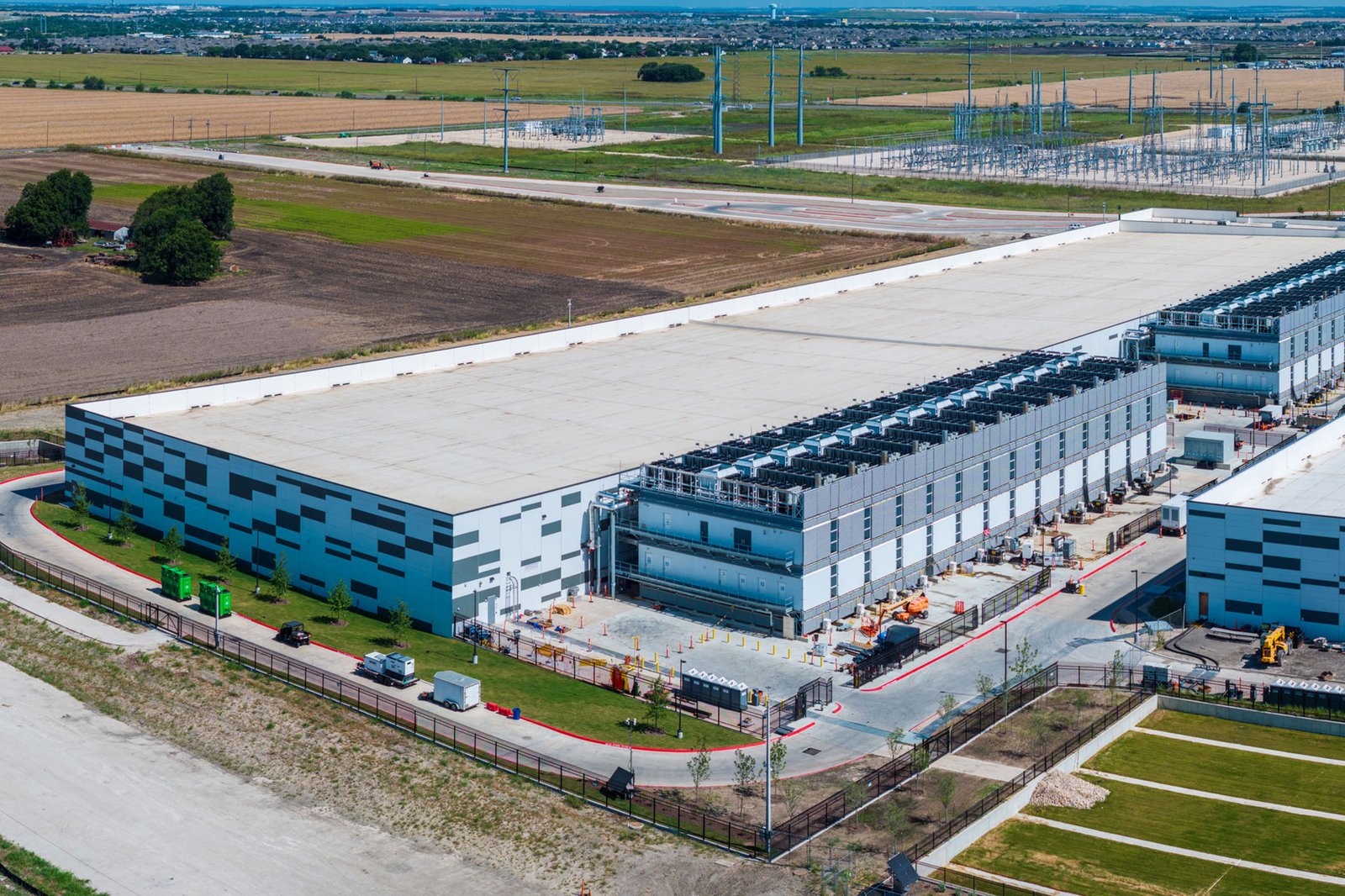


Texas is rapidly emerging as one of the largest AI‑driven data center markets in the world, with new capacity and megawatts under construction across the state. As AI workloads drive higher rack power densities, cabling pathways are under more scrutiny because of their impact on heat loads, airflow, and congestion in critical white space.
For today’s projects, choosing structured cabling is about more than link performance or bandwidth. Non‑compliant cabling systems can contribute to failed AHJ (authority having jurisdiction) inspections, delayed certificates of occupancy, insurance complications, elevated fire loads, and electromagnetic interference (EMI) that degrades IT and network reliability.
Cabling compliance is often challenging for Texas data center operators because installations sit at the intersection of multiple frameworks, each with different scopes and enforcement mechanisms. The National Electrical Code (NEC) establishes fire and life‑safety requirements for pathways and cable types, FCC rules address emissions and interference, and TIA standards define performance and best‑practice design for structured cabling in data centers. For project managers, engineers of record, and AHJ inspectors, understanding where these requirements overlap, and where they do not, is critical to getting first‑time inspection approvals.
This article reviews the primary compliance frameworks that apply to data center structured cabling (NEC, FCC regulations, and TIA data center and structured cabling standards) and then examines how they intersect in practice on real Texas projects.
The NEC Framework: Where Electrical Code Meets Cabling Infrastructure
The National Electrical Code, published by the National Fire Protection Association and adopted by Texas through the State Fire Marshal's Office and local jursidictions, governs the physical installation of cabling in ways that directly affect data center design and construction.
For structured cabling, several articles are particularly important:
- Article 800 – Communications Circuits: Article 800 covers communications circuits, including the copper cabling used for voice and many low-voltage data applications. It establishes requirements for separation from power conductors, fire-resistant ratings (for example, plenum versus riser), and termination in accessible spaces. For data centers with extensive horizontal cabling routed through environmental air spaces, Article 800 compliance often determines whether plenum-rated (CMP) cable is required or whether riser-rated (CMR) is acceptable.
- Article 645 – Information Technology Equipment Rooms: Article 645 applies specifically to information technology equipment rooms and addresses topics such as electrical supply to equipment, disconnecting means, and the conditions under which an IT room can be treated as a special occupancy. One key point for data center projects: the Article 645 “IT equipment room” exemption only applies if all conditions in 645.4 are met. If the space does not fully qualify, cabling under raised floors or above the ceiling generally must be listed and installed in accordance with the applicable cable and plenum articles, and partial compliance does not preserve the Article 645 exception.
- Article 770 – Optical Fiber Cables and Raceways: Article 770 governs optical fiber cabling and associated raceways. While it mirrors the structure of Article 800, it addresses fiber-specific considerations such as the use of conductive versus nonconductive cables, installation in raceways, and required separation from power circuits. Conductive optical fiber cables, which may include metallic strength members or armor, trigger additional requirements even though the glass fiber itself does not carry current.
Texas AHJs generally enforce the most recently adopted NEC edition for their jurisdiction, but adoption cycles and any local amendments can vary by municipality. For projects spanning multiple Texas markets, design teams should confirm the NEC edition and local modifications in force with the AHJ before finalizing construction documents, rather than assuming uniform statewide adoption.
FCC Regulations: EMC, Part 15, and What It Means for Installed Cabling
The FCC's role in data center cabling compliance is less direct than the NEC's but still consequential from an electromagnetic compatibility (EMC) and liability standpoint. The primary framework is Part 15 of Title 47 of the Code of Federal Regulations, which governs radio-frequency emissions from unintentional radiators, including information technology equipment and associated cabling.
In high-density computing environments, poorly shielded or improperly installed cabling can contribute to electromagnetic interference (EMI) that degrades internal system performance or, in extreme cases, affects nearby spectrum users. While the FCC does not perform construction-phase inspections of individual cabling installations, Part 15 limits still apply to the overall system, and interference complaints or enforcement actions can reach the facility owner or operator. As a result, EMI risk is a legitimate design consideration alongside fire and life-safety requirements.
For copper cabling systems, this typically translates into specifying shielded twisted pair (for example, F/UTP or S/FTP) where significant EMI sources are present, ensuring proper grounding and bonding of shielded cabling and connectivity hardware, and selecting active equipment and components that carry appropriate FCC compliance markings. Choosing unshielded twisted pair in a high-interference environment does not, by itself, violate a prescriptive “installation rule”, but it can contribute to emissions or susceptibility problems that surface later as performance issues or compliance discussions.
FCC Part 68, which addresses the connection of terminal equipment to the public switched telephone network (PSTN), is generally more relevant to legacy telephony and to facilities with direct PSTN interfaces than to typical hyperscale or colocation data center cabling. However, operators of mixed-use sites that still maintain PSTN-connected circuits should ensure that any such interfaces and attached equipment remain Part 68 compliant, even as the broader cabling plant is engineered primarily around IP-based services.
TIA Standards: The Design and Performance Baseline
The Telecommunications Industry Association publishes the standards that define how data center cabling should be designed, installed, and tested. Unlike the NEC, TIA standards are not adopted as law and are not enforced by code officials; instead, they function as the accepted baseline for professional practice, and are frequently incorporated by reference into owner specifications, construction contracts, and insurance or uptime requirements.
TIA-942, the standard for telecommunications infrastructure in data centers, is the primary framework for structured cabling design in purpose-built facilities. It addresses topology, redundancy, pathway and space planning, and the physical separation and roles of entrance rooms, main distribution areas, horizontal distribution areas, and equipment distribution areas. For Texas operators expanding existing facilities or building new ones, alignment with TIA-942 is usually driven by owner's program requirements, uptime objectives, and commercial expectations rather than by statute. In practical terms it still becomes a de facto requirement for the project team.
TIA-568 series, covering commercial building telecommunications cabling, establishes performance and interoperability specifications for copper and fiber cabling components and channels. When an installation specifies Category 6A copper or OM4 multimode fiber, those designations refer to performance classes defined by TIA-568. Proper installation, including adherence to bend radius limits, pathway and conduit fill, pulling tension, and termination methods are necessary to achieve the rated performance. If field test results show that an installed link does not meet its specified category, the installation does not conform to the design intent even if the cable itself is listed and marked correctly.
TIA-607 defines requirements for telecommunications bonding and systems. In data centers, proper bonding of cable trays, ladder racks, enclosures, and shielded cabling systems is critical for both signal integrity and personnel safety. TIA-607 is applied in conjunction with NEC grounding and bonding provisions, with TIA documents providing a structured, ICT-specific bonding architecture that complements the broader electrical design.
How These Frameworks Intersect in Practice
The practical challenge for project teams and inspectors is that these three frameworks do not share a common enforcement path. The NEC is enforced through the building permit and inspection process. FCC rules are enforced through interference investigations and compliance actions. TIA standards are enforced through contract language, owner program requirements, and acceptance procedures.
As a result, it is entirely possible for a cabling installation to pass building inspection under the NEC while failing to meet TIA performance specifications. Conversely, a system can align with TIA design guidance yet still employ components or practices that are not listed or acceptable for the installed environment under NEC articles. Clear project documentation, test reports, and as-built drawings are what allows each stakeholder to verify the aspects of compliance that fall within their scope of responsibility.
For Texas data center operators, “standard practice” typically means:
- Designing structured cabling to ANSI/TIA-942 and ANSI/TIA-568 for topology, redundancy, and end-to-end channel performance
- Specifying and installing components that carry appropriate listings and ratings for their environment under the adopted NEC edition.
- Testing and certifying all permanent links to the specified performance category and documenting test results for owner acceptance.
- Maintaining design records, submittals, test reports, and as‑built drawings that support both the building inspection process and the owner’s technical and contractual requirements.
Working With a Partner Who Understands the Full Picture
Hexatronic Data Center Solutions designs and installs structured cabling systems that are engineered to meet applicable NEC requirements, align with TIA standards, and account for EMC considerations in high‑density computing environments.
For project managers and engineers of record who need a cabling partner that understands how these frameworks interact from design through inspection and turnover, that capability is embedded in our design process, product selections, and installation practices.
If you have questions about compliance documentation, installation standards, or project‑specific requirements for an upcoming Texas build or expansion, contact Hexatronic to review your facility’s needs and the applicable code and standards landscape.